Getting around an unfamiliar city can be one of the biggest concerns when planning a first visit. Fortunately, Sapporo offers several practical transportation options that make it relatively easy to move between major attractions, dining areas, shopping districts, and transportation hubs.
For first-time visitors, understanding how the city’s transportation system works can make the entire trip feel more manageable. Knowing when to use trains, subways, buses, taxis, or simply walk can also help travelers create a more efficient daily itinerary.
Transportation should ideally be considered alongside the rest of the trip rather than as a separate concern. When planning routes between attractions, meals, and accommodation, travelers can create a smoother schedule and avoid spending unnecessary time commuting.
Understanding Transportation in Sapporo
Sapporo is a large urban area, but many of its popular attractions are concentrated around central districts. This makes it possible to combine public transportation with walking for many sightseeing plans.
The most useful transportation option depends on the destination, weather, time available, and travel preferences.
Subway
The subway is one of the most practical choices for moving around central Sapporo.
It can be particularly useful when travelers want to cover longer distances quickly while avoiding road traffic. The subway also provides a convenient alternative during periods of cold weather when spending too much time outdoors may be uncomfortable.
First-time visitors should familiarize themselves with the station closest to their accommodation and identify the stations serving the areas they plan to visit.
Trains
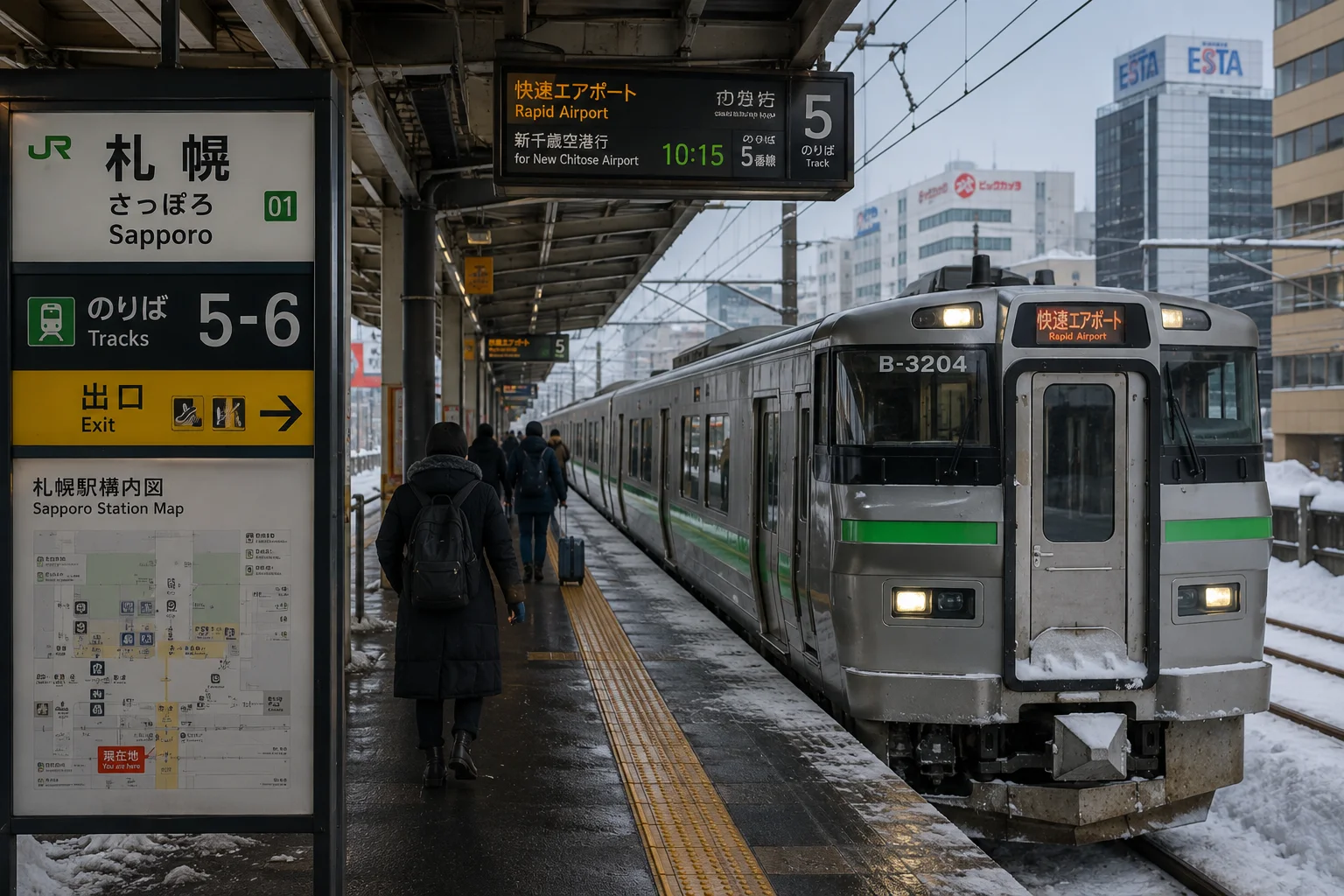
Rail services are useful when traveling beyond the central city or connecting Sapporo with other destinations.
Travelers staying in Sapporo who plan to explore surrounding areas may find train travel particularly useful for day trips.
For a city-focused itinerary, however, trains and the subway can often be combined rather than relying on one system exclusively.
Buses
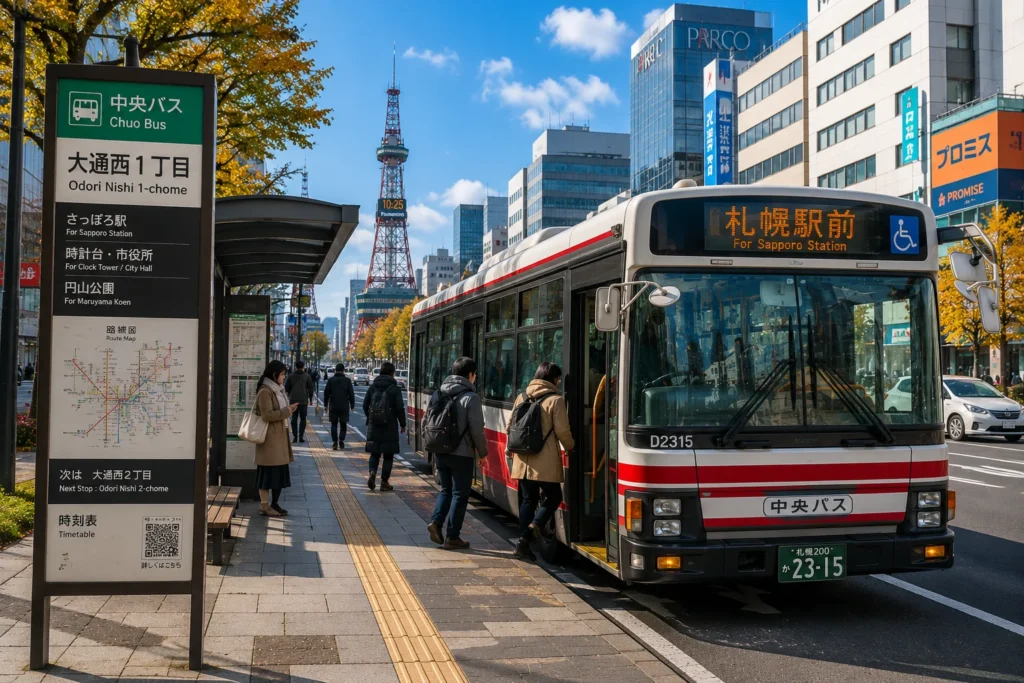
Buses can reach areas that are not directly served by subway stations or railway lines.
They may be particularly useful when visiting attractions located farther from central transportation hubs.
However, first-time visitors may find buses slightly more complicated than the subway because routes, stops, and schedules require more attention. Checking the route before departure can make the experience much easier.
Taxis
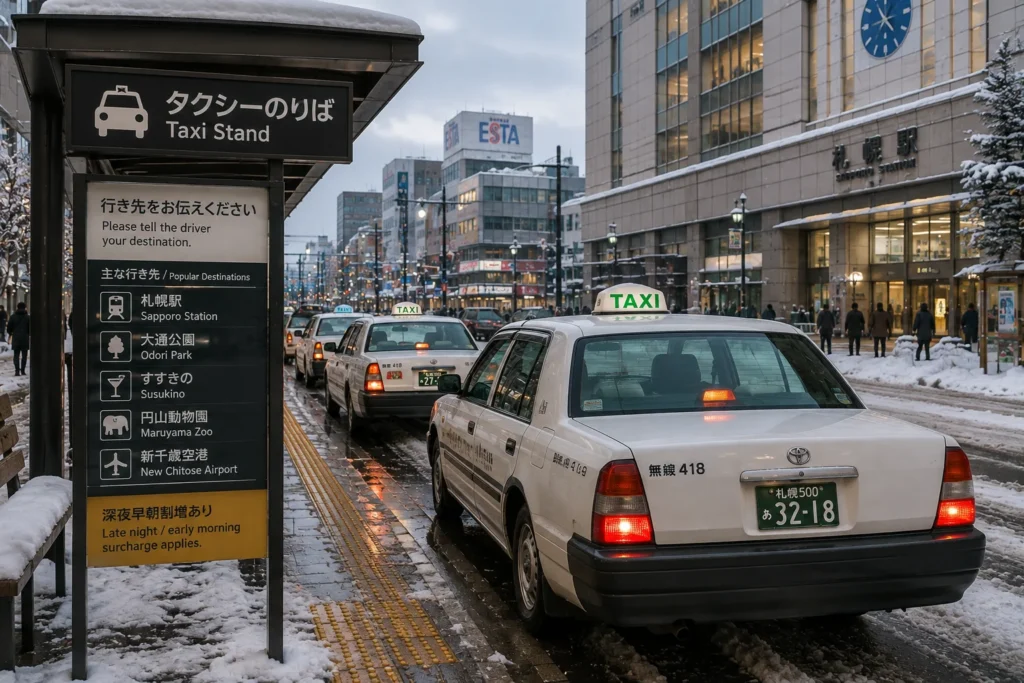
Taxis offer convenience when travelers are carrying luggage, traveling with several people, or visiting locations that are less convenient to reach by public transportation.
They can also be useful late in the evening or when weather conditions make walking less appealing.
Although taxis may cost more than public transportation, they can save time and reduce the effort involved in navigating unfamiliar routes.
Walking Around Central Sapporo
Public transportation is useful, but walking should not be overlooked.
Nearby attractions can often be connected on foot
When several attractions are located within a reasonable distance, walking between them can be more enjoyable than taking transportation for every short journey.
Walking gives travelers the opportunity to see more of the city, discover smaller businesses, and experience the atmosphere of different neighborhoods.
It can also make the itinerary feel less fragmented.
Walking can complement public transportation
Travelers do not have to choose between walking and public transportation.
A practical approach is to use the subway or train for longer distances and then explore each destination area on foot.
For example, visitors can travel to a central neighborhood by subway and spend the next few hours walking between nearby attractions before taking transportation to the next area.
This approach provides both efficiency and flexibility.
Planning Transportation Around Your Itinerary
One of the easiest ways to make transportation simpler is to plan the day’s destinations together.
Group nearby attractions
Instead of visiting attractions based only on popularity, look at their locations before deciding the order.
If several places are relatively close, they can be visited during the same part of the day.
This reduces unnecessary back-and-forth travel and leaves more time for sightseeing.
Start with your furthest destination
Another useful approach is to visit the destination that requires the most travel earlier in the day.
After reaching the farther location, travelers can gradually move back toward central areas while visiting attractions along the way.
This can be especially useful when the itinerary includes a mixture of city attractions and destinations farther from the center.
Leave room for delays
Travel schedules do not always go exactly as planned. Trains may take longer than expected, a restaurant stop may run late, or an attraction may require more time than anticipated.
Leaving some space between major activities can prevent one delay from disrupting the entire day.
Transportation During Winter
Winter deserves additional consideration when planning transportation in Sapporo.
Snow, cold temperatures, and slippery surfaces can change how comfortable it is to walk between transportation stops.
Allow extra walking time
A route that normally takes a short time on foot may take longer during winter.
Travelers may need to walk more carefully, particularly when snow or ice is present.
This should be considered when deciding how many attractions to visit in a single day.
Use indoor routes when possible
When temperatures are low, choosing routes that minimize outdoor exposure can make the journey more comfortable.
Travelers may prefer to spend more of the journey using public transportation and reduce unnecessary outdoor walking.
This does not mean avoiding walking completely. It simply means choosing when walking makes sense.
Wear appropriate footwear
Winter travelers should prioritize footwear that provides warmth and traction.
Comfortable shoes can make a significant difference when moving between stations and attractions throughout the day.
Getting Around With Luggage
Transportation becomes slightly different when travelers have large suitcases.
Consider your accommodation location
Staying close to a major transportation connection can make arrival and departure days easier.
Travelers who are carrying luggage may prefer a route that involves fewer transfers, even if it takes slightly longer.
Convenience can be more valuable than saving a small amount of travel time.
Avoid unnecessary transfers
Changing between multiple transportation services can become tiring when carrying luggage.
When possible, choose a route with fewer transfers, particularly when arriving in Sapporo or traveling to the airport.
Consider a taxi when appropriate
A taxi can be particularly practical when traveling with several pieces of luggage or when the accommodation is difficult to reach from a station.
It can also be useful for families or groups where the combined convenience makes the additional cost worthwhile.
Using Transportation During Peak Hours
Like many major cities, Sapporo can become busier during certain periods of the day.
Travel outside the busiest periods when possible
Travelers with flexible schedules may find it more comfortable to avoid the busiest commuting periods.
For sightseeing, starting earlier can also provide an advantage by allowing visitors to reach popular areas before they become more crowded.
Consider attraction timing
Transportation planning should also take opening hours and attraction schedules into account.
There is little benefit in arriving at a destination early if the attraction is not yet open. Similarly, leaving a busy area slightly later may create a more relaxed journey.
Planning Airport Transfers
For many international visitors, the journey between the airport and Sapporo is one of the first transportation decisions they will make.
Plan the arrival route in advance
After a long flight, navigating an unfamiliar transportation system can be tiring.
Knowing the general route to your accommodation before arrival can reduce stress.
Travelers should consider where they need to go, how much luggage they have, and whether the route requires transfers.
Keep departure day simple
The return journey deserves the same level of planning.
Travelers should allow enough time to reach the airport without relying on a tight schedule.
Unexpected delays, weather conditions, and luggage handling can all take additional time.
Transportation for Different Types of Travelers
Different travelers may benefit from different transportation strategies.
Solo travelers
Solo visitors can usually adapt their transportation choices easily.
They may prefer public transportation for most journeys and walk between nearby attractions whenever convenient.
Because they do not need to coordinate with a group, they can also change plans more easily.
Couples
Couples can combine public transportation with walking depending on the day’s itinerary.
For evening dining or special occasions, taking a taxi may also provide additional convenience.
Families
Families may need to consider luggage, children, rest periods, and the amount of walking involved.
Choosing routes with fewer transfers can make the day easier, particularly when traveling with young children.
Older travelers
Travelers who prefer to minimize stairs or long walking distances should pay attention to station access and the distance between transportation stops and attractions.
A slightly longer transportation route may be preferable if it significantly reduces walking.
Combining Transportation With Dining
Food is an important part of visiting Sapporo, and transportation planning can make dining experiences easier.
Choose restaurants near planned activities
Instead of traveling across the city specifically for every meal, travelers can look for dining options near the areas they are already exploring.
This saves time and creates a more natural flow between sightseeing and meals.
Plan dinner around your final destination
For evening dining, it can be convenient to choose a restaurant near the last attraction of the day or along the route back to the accommodation.
This can reduce unnecessary travel after a long day.
Keeping Transportation Costs Under Control
Transportation costs can add up during a multi-day trip.
Avoid unnecessary journeys
A well-organized itinerary naturally reduces transportation expenses because travelers are not repeatedly moving between distant parts of the city.
Grouping attractions together can therefore benefit both time and budget.
Choose convenience strategically
Saving money does not always mean choosing the cheapest possible route.
If a slightly more convenient option saves significant time or effort, it may be worthwhile, especially during a short vacation.
The goal is to find a balance between cost, comfort, and efficiency.
Useful Habits for First-Time Visitors
A few simple habits can make navigating Sapporo easier.
Check the route before leaving
Before starting each journey, confirm the general route and destination.
This is especially useful when changing between transportation systems.
Keep your phone accessible
A smartphone can be useful for checking directions, transportation information, and changes to plans.
However, travelers should avoid relying entirely on real-time navigation without understanding their general route.
Give yourself extra time
First-time visitors naturally need more time to find stations, platforms, exits, and bus stops.
Allowing a little extra time can make the journey much less stressful.
Making Transportation Part of the Travel Experience
Transportation does not always have to be viewed simply as a way to get from one attraction to another.
Walking through different neighborhoods, looking out of a train window, or discovering a new area after getting off at an unfamiliar station can all become part of the travel experience.
The most important thing is to avoid making the itinerary so rigid that every transportation connection becomes a source of pressure.
A flexible approach gives travelers the freedom to adjust their plans when they discover something interesting.
How Transportation Fits Into a Sapporo Trip
Transportation works best when it is considered as part of the overall itinerary.
Accommodation location, sightseeing priorities, dining plans, weather, and available time all influence which transportation method makes the most sense.
Travelers who want to organize these elements before arriving can start with a broader sapporo trip planning approach and then build transportation decisions around their daily activities.
This makes it easier to create a schedule that is practical without becoming overly complicated.
Conclusion
Sapporo offers several transportation options that can accommodate different travel styles. The subway and trains are useful for covering longer distances, buses provide access to areas beyond major rail connections, taxis offer convenience, and walking remains an excellent way to explore central neighborhoods.
For first-time visitors, the most effective strategy is usually a combination of these options rather than relying on only one.
Group nearby attractions, consider the season, allow extra time during winter, plan airport transfers in advance, and choose routes that match your luggage and travel companions.
With a little preparation, transportation can become one of the easier parts of a Sapporo trip, allowing more time and energy to be spent enjoying the city’s food, culture, shopping, and seasonal experiences.
Frequently Asked Questions
What is the easiest way to get around Sapporo?
For many city sightseeing itineraries, the subway combined with walking is a practical option. Trains, buses, and taxis can supplement this depending on the destination.
Can I explore Sapporo on foot?
Yes. Walking can be very useful for exploring central areas and connecting nearby attractions, although weather and distance should be considered.
Is public transportation convenient in Sapporo during winter?
Public transportation can be particularly useful during winter because it reduces the amount of time spent walking outdoors. Travelers should still allow additional time for winter conditions.
Should I use taxis in Sapporo?
Taxis can be useful when traveling with luggage, in groups, late at night, or when a destination is inconvenient to reach by public transportation.
How can I make transportation easier as a first-time visitor?
Plan routes before leaving, group nearby attractions, allow extra time for transfers, and keep your itinerary flexible enough to accommodate unexpected delays.


